
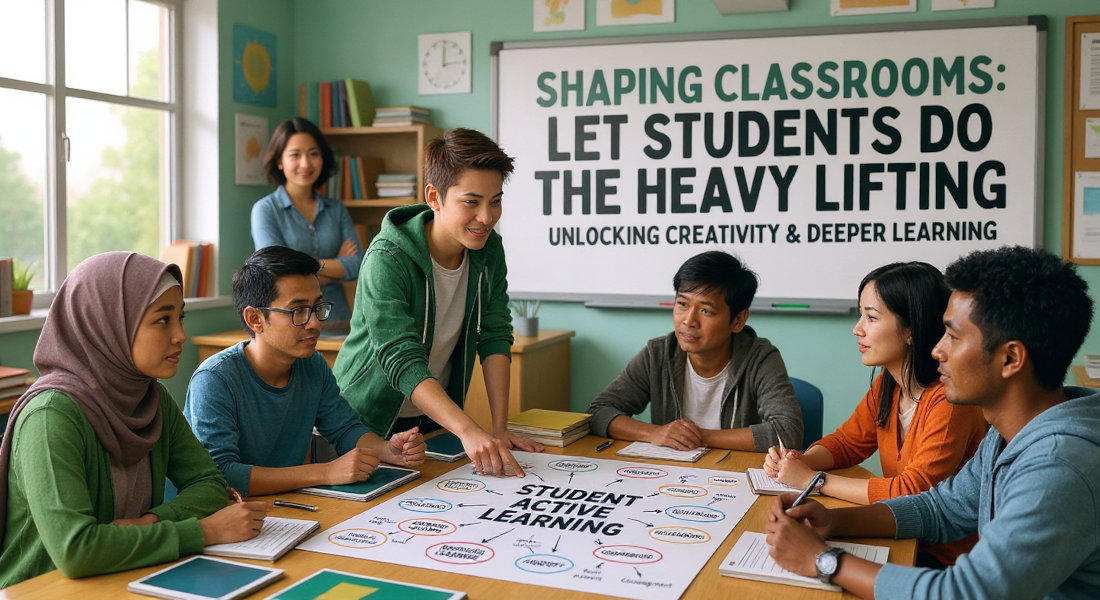
Think back to the best lesson you ever taught. Was it the one where you delivered a perfectly polished lecture, or the one where the room was buzzing with student activity? More importantly, who was doing the most work in that moment: you or your students?
The most effective way to teach might actually be to do less. By shifting the spotlight away from the teacher, we unlock deeper learning, creativity, and independence in our students. This approach, often called making students do the “heavy lifting,” is centred on active learning processes.
The Power of Active Learning
Active learning isn’t just a buzzword; it’s a paradigm shift rooted in constructivist learning theory. This theory emphasises that learners build fresh understandings by connecting new information to their prior knowledge, often through vital peer-to-peer interactions.
When students engage in active methods, such as thinking, discussing, investigating, and creating, they develop essential 21st-century skills. This personal connection to the material significantly increases their motivation to learn and helps build a strong sense of classroom community through shared goals.
The Emotional Connection to Memory
There is also a profound link between active learning and memory. Engaging activities can trigger positive emotions and enjoyment. When content evokes an emotional response, learners are naturally more likely to pay attention. Because emotions influence brain regions involved in memory, students tend to remember these active experiences with far greater clarity and detail.
Making the Shift in Your Classroom
Promotion of active learning can be achieved through strategies like project-based learning, task-based learning, and discovery or enquiry learning. Consider how you can step back in your next activity:
- Learning Vocabulary or Grammar: Instead of explaining, let students discover the rules or meaning through developing their own quizzes and example sentences.
- Developing Skills: Let students grapple with a text or audio before providing answers by using peer assessment.
- Writing and Feedback: Shift the responsibility for essay planning onto the students by creating a reverse outline of an exemplar first.
It’s like teaching someone to swim; you don’t just describe the movements, you have to let them get in the water. Ask yourself: are you ready to move from being the “sage on the stage” to the “guide on the side”?
If you would like Bright Spark Ed to deliver a workshop for teachers on this topic at your school or university, contact us HERE. Other topics are also available such as ‘PBL Unplugged’ or ‘Assessment in the Age of AI.’